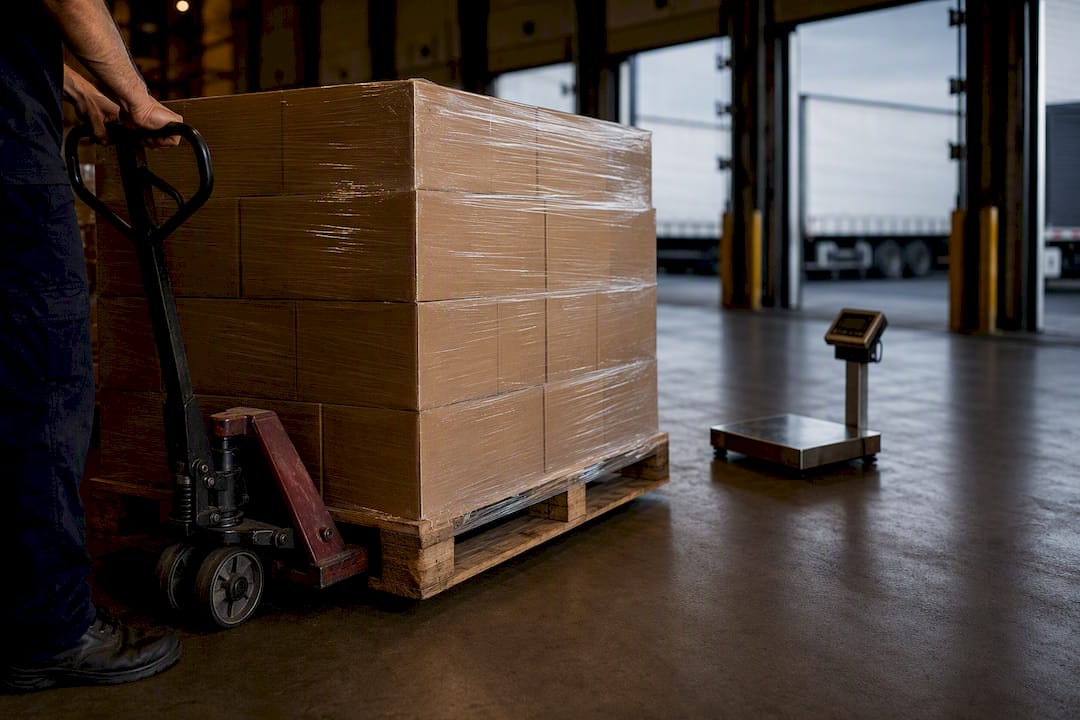
EXW places nearly all origin responsibility on the buyer, from loading to export clearance to booking the freight. FOB keeps that burden on the seller until the goods are loaded on board the vessel. For most international buyers without a trusted forwarder or a local presence in the seller’s country, FOB (or FCA for containerized cargo) is the safer bet. EXW works best when the buyer already runs origin logistics or wants full control over the shipping chain.
**TL;DR:** Using EXW shifts nearly all origin responsibilities to the buyer, including export clearance and loading, which can cause legal and logistical challenges for inexperienced importers. FOB responsibilities include the seller delivering goods to the port, clearing export, and loading onto the vessel, with risk transferring once cargo is on board, mainly suitable for ocean and inland waterway shipping. Buyers without a local forwarder or export license should prefer FOB or FCA over EXW, as it reduces compliance risks and simplifies export procedures. Comparing costs, FOB often involves higher origin handling expenses but offers clearer logistics division, while EXW may look cheaper initially but can be more costly after considering handling and documentation fees. Properly defining the exact delivery point, documenting responsibilities, and coordinating with your forwarder prevent common pitfalls such as export document issues and container mismatch problems.
Table of Contents
- EXW vs FOB: What Does Ex Works Actually Require?
- What Does FOB Mean in Shipping, and Where Does It End?
- EXW vs FOB vs CIF: How Do the Costs and Risk Points Compare?
- How Do You Choose Between EXW and FOB for Your Order?
- What Operational Traps Catch Buyers Off Guard?
- Why We Push Packaging Clients Toward FOB or FCA
- Ready to Simplify Your Next Export Shipment?
- Sources
- FAQ
EXW vs FOB: What Does Ex Works Actually Require?
Ex Works meaning, in plain terms: the seller’s job ends the moment the goods are made available at a named location, usually the factory or warehouse door. Everything after that, including physically loading the truck, becomes the buyer’s problem unless you’ve negotiated otherwise in writing. That’s the whole basis of the EXW Incoterm, and it’s why EXW quotes often look deceptively low on a spec sheet.
Under EXW, you as the buyer typically handle:
- Loading the goods onto your own truck or a hired one
- Inland transport to the port or airport
- Export customs clearance in the seller’s country
- International freight booking and insurance
- Import clearance and delivery at destination
**Cross border disputes over Incoterms often trace back to unclear loading responsibility** at origin, according to trade logistics practitioners who flag EXW as the term most often misapplied for export sales. The ICC’s own Incoterms 2020 guidance notes that EXW was really designed with domestic trade in mind, and using it for exports can create real compliance headaches for buyers who aren’t legally set up to clear customs in someone else’s country.
EXW can make sense if you’re an experienced importer with your own freight-forwarder relationships in the supplier’s country, or you simply want maximum control over every leg of the journey. For everyone else, it’s a term that looks simple on paper and gets complicated fast.
What Does FOB Mean in Shipping, and Where Does It End?
FOB shipping explained simply: the seller delivers the goods to the named port, clears them for export, and physically loads them on board the vessel the buyer has nominated. Risk transfers to the buyer only once the cargo is on board, not before. That’s the standard defined in Incoterms 2020’s FOB rule, and it puts far more of the origin workload on the seller than EXW does.
Seller responsibilities under FOB include:
- Inland transport from the factory to the port
- Terminal handling charges at origin
- Export customs clearance and documentation
- Physically loading the cargo on board the vessel
The buyer picks up from there, covering main carriage, marine insurance, and import formalities at destination. This split makes FOB well suited to bulk or breakbulk ocean shipments where a seller with strong local relationships can clear export paperwork faster and cheaper than a foreign buyer could.
FOB has one notable limit: it applies to sea and inland waterway transport only, and it wasn’t built for the realities of modern container shipping. A container often sits in a terminal yard for days before it’s craned onto a ship, which makes the exact “on board” moment murky. Logistics practitioners increasingly flag FCA as the cleaner term for container handoffs.
**Pro Tip:** _Always write the full term into your contract, for example “FOB Shanghai, Incoterms 2020,” never just “FOB.” Naming the port and the Incoterms edition removes any ambiguity about which rulebook governs the transaction._
EXW vs FOB vs CIF: How Do the Costs and Risk Points Compare?
The clearest way to compare EXW vs FOB shipping is to trace exactly where risk and cost obligations change hands.
| Factor | EXW | FOB |
|---|---|---|
| Point of risk transfer | Goods made available at seller’s premises | Goods loaded on board the vessel |
| Origin loading | Buyer’s responsibility | Seller’s responsibility |
| Export clearance | Buyer’s responsibility | Seller’s responsibility |
| Main carriage (ocean freight) | Buyer arranges and pays | Buyer arranges and pays |
| Import clearance | Buyer’s responsibility | Buyer’s responsibility |
| Suitable transport modes | Any mode | Sea and inland waterway only |
| Letter of credit / documents | Seller often can’t provide bill of lading | Seller can typically obtain bill of lading |
The cost split between EXW and FOB comes down to who’s better positioned to handle origin work cheaply and legally, not just who pays which line item.
**Takeaways:**
| Signal | What it tells you |
|---|---|
| You lack a forwarder in the seller’s country | Lean toward FOB or FCA, not EXW |
| Your supplier refuses EXW on export orders | Likely a VAT or exporter-of-record concern, common and reasonable |
| Your unit price comparison favors EXW | Recalculate landed cost before deciding, EXW can end up pricier |
A term that shifts more of the paperwork to the party who can do it fastest usually produces a smoother shipment than one that just looks cheaper on the invoice.
How Do You Choose Between EXW and FOB for Your Order?
Run through this checklist before you lock in Incoterms with a supplier:
- *Do you have a customs broker or forwarder physically located in the seller’s country?** If not, EXW is risky.
- *Can you legally file export declarations in that country?** Most foreign buyers cannot, which is a core EXW pitfall.
- *Will you need a letter of credit to pay the supplier?** If yes, FOB is almost always the better fit, since the seller can secure the bill of lading your bank will require.
- *Is your cargo containerized or breakbulk?** Containerized shipments often run smoother under FCA than strict FOB.
- *Does your supplier already have an established relationship with a port agent?** If so, letting them handle origin work under FOB usually beats doing it yourself.
When you’re talking to a supplier or forwarder, ask directly: who files the export declaration, who provides proof of export for tax purposes, and who is responsible for physically loading the container or truck. Vague answers here are a red flag, especially for suppliers you haven’t qualified thoroughly.
**Pro Tip:** _Never compare EXW and FOB by unit price alone. Calculate full landed cost, unit price plus origin handling, terminal fees, ocean freight, and import clearance. A lower EXW quote can end up costlier once you add the logistics work you now own._
What Operational Traps Catch Buyers Off Guard?
Three pitfalls come up constantly in real shipments, and they rarely show up until money or documents are already on the line.
- *Exporter-of-record exposure.** Many sellers refuse EXW on export orders because they lose the transport documents needed to prove the goods actually left the country for VAT zero-rating.
- *Letter-of-credit friction.** Banks typically require a bill of lading controlled by the seller. Under EXW, the seller often never touches that document, which can stall your L/C draw entirely.
- *Container mismatch.** FOB was written for cargo loaded by hand or crane directly onto a vessel, not for containers sitting in a terminal queue.
Parties should define the exact terminal delivery point and the evidence required to prove “on board” delivery in their contract language, rather than assuming FOB automatically covers a container handoff cleanly.
The fix in every case is the same: specify Incoterms 2020 by name, name the exact port or place, state who provides loading equipment, and build a documentary checklist with your forwarder before the shipment leaves the factory.
Why We Push Packaging Clients Toward FOB or FCA
Handling export handoffs for custom rigid boxes, cartons, and labels over many years and shipping a very large volume of units have taught us where Incoterm confusion actually costs buyers time. Our default advice to brand clients: choose FOB or FCA unless you have a genuine export operation in our region, because it puts loading, export clearance, and documentary proof in the hands of the party best equipped to handle them. We also help buyers agree on who supplies loading equipment before production finishes, so nothing stalls at the dock.
_— Anthony_
Ready to Simplify Your Next Export Shipment?
Choosing the right Incoterm only solves half the problem if your packaging supplier can’t back it up with clean paperwork and a coordinated handoff. Yuanpackaging handles export documentation, loading coordination, and forwarder communication as a standard part of production, not an afterthought bolted on after the goods are ready.

That means fewer surprises at customs, cleaner bills of lading for your letter of credit, and packaging that arrives export-ready the first time. Whether you need rigid gift boxes, folding cartons, or pressure-sensitive labels, our team works with your forwarder from the start rather than leaving you to untangle EXW logistics on your own. Browse our packaging product range and request a quote to see how we structure export terms for brands shipping internationally.
FAQ
What does EXW mean in shipping?
EXW, or Ex Works, means the seller only has to make the goods available at a named location, typically their factory or warehouse. The buyer takes on loading, export clearance, freight, and import formalities from that point forward.
What does FOB mean in shipping?
FOB, or Free On Board, means the seller delivers the goods to the named port, clears them for export, and loads them on board the buyer’s nominated vessel. Risk passes to the buyer once the cargo is on board.
What are the differences between EXW, FOB, and CIF Incoterms?
EXW puts the most work on the buyer, FOB shifts origin loading and export clearance to the seller, and CIF goes further still by requiring the seller to also pay for main carriage and minimum insurance to the destination port. DDP and DAP go even further, with the seller handling import duties or delivery to a named destination, which is a useful contrast when comparing DDP vs FOB or DAP vs DDP for a given contract.
Who pays for shipping on EXW?
Under EXW, the buyer pays for and arranges the entire shipping chain, including inland transport, international freight, and insurance. The seller’s cost responsibility ends once the goods are made available at their premises.
Is EXW or FOB better for containerized cargo shipped from overseas suppliers?
Neither term was built specifically for containers, but FOB comes closer to matching how container terminals operate than EXW does. Many logistics practitioners recommend FCA instead of FOB for container shipments, since it defines a clearer handoff point at the terminal rather than an ambiguous “on board” moment.