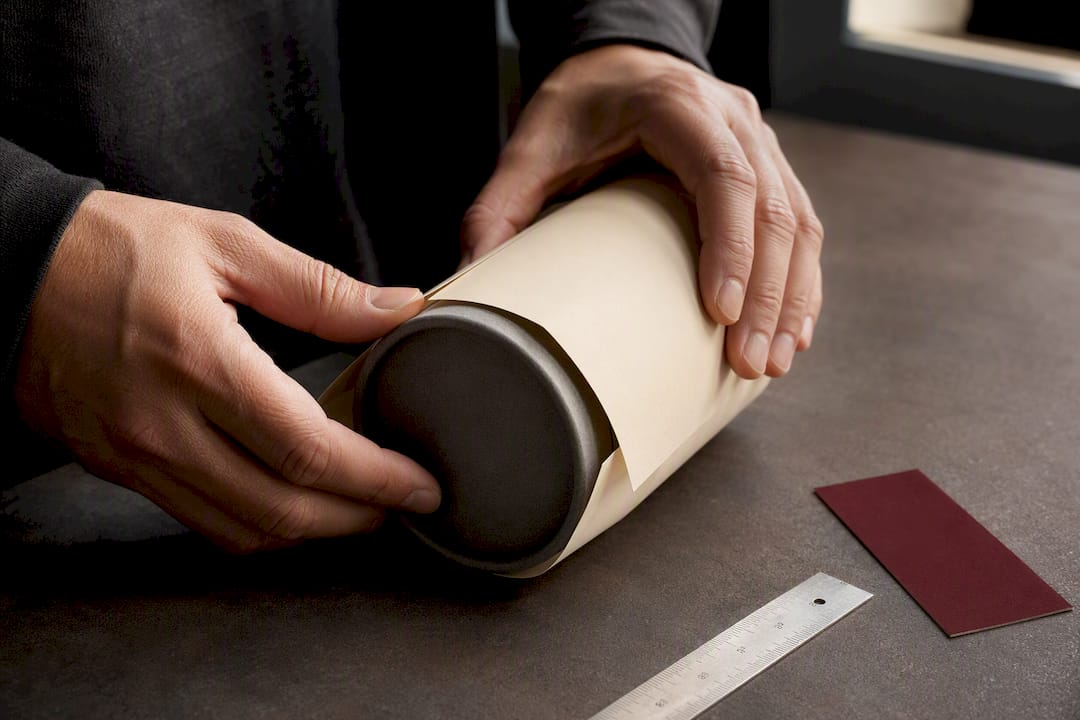
A packaging sleeve, also called a belly band or box sleeve, is a printed wrap that fits around a base container to deliver branding, product visibility, and shelf standout at a fraction of a full carton’s tooling cost. Sleeves work best on gift sets, limited editions, and any product where a windowed reveal sells the contents better than a sealed box. If you’re deciding between a sleeve and a rigid carton, the sleeve almost always wins on speed and budget for shorter runs.
**TL;DR:** Sleeves are most cost-effective when used for limited editions, seasonal updates, or gift sets, especially compared to rigid cartons on short runs. Accurate measurements of the container and material thickness are essential to ensure a snug fit, with manufacturer-provided dielines reducing the risk of errors. Material choices vary based on application, with coated stocks for photography and uncoated or grease-resistant stocks for food products, complemented by finishes like foil, embossing, or gloss for impact. Proper file preparation, including CMYK color mode, bleed, and dieline layers, is crucial to avoid press errors and ensure color accuracy and structural fit. Yuan Packaging offers experienced production with custom finishes, sustainability options, and prototype approval stages to deliver high-quality sleeves at any scale.
Yuanpackaging
Explore Yuan Packaging
Table of Contents
- Features, Benefits, and Common Use Cases for Sleeve Packaging
- Sizes, Measurements, and Dielines: How to Guarantee a Snug Fit
- Material Selection and Finishes: Choosing Stock and Effects for Brand Impact
- Print-Ready Files and Production Checklist (CMYK, Bleed, Proofs, and Timelines)
- Yuan Packaging’s Sleeve Capability: Proof Points, Workflow, and What They Deliver
- Design Perspective: Using Tactile Storytelling and Restraint to Make Sleeves Memorable
- Work With Yuan Packaging: Request a Sample or Quote
- Key Standards and Reference Links
- Sources
- FAQ
Features, Benefits, and Common Use Cases for Sleeve Packaging
A sleeve gives you two structural choices: full 360-degree coverage or a windowed partial wrap that shows off the product underneath. Full wraps work when your brand story lives entirely in the print. Windowed sleeves earn their keep when the product itself is the selling point, a candle’s wax color, a spirit’s hue, and a cosmetic compact’s finish.
Sleeves show up most often in three contexts. Retail shelf differentiation is the obvious one; a printed sleeve over a plain kraft box lets you run seasonal colorways without retooling the entire structure. Limited editions and collaborations use sleeves the same way, since a new print run costs far less than a new die. Gift set architecture is the third, and often the most creative: sleeves can bundle a bottle, a card, and a small accessory into one cohesive presentation without a custom insert tray.
The operational case is just as strong as the creative one. Sleeve dies cost less to tool than a rigid box, and because the print wraps a simple structural shape, you can run multiple SKU variations off the same base substrate. That flexibility matters when a brand manager needs five flavor variants live for a seasonal push without five separate box orders.
Sustainability plays into the decision too. Recycled and FSC-certified board sleeves read as considered choices to procurement teams and increasingly to consumers scanning shelves, and tightening packaging sustainability expectations mean this is no longer a nice-to-have line item on a brief.
Where sleeves earn their place on a packaging line:
- Belly bands over rigid boxes for gift bundles that need a single cohesive wrap
- Windowed sleeves over cosmetic jars and candle tins to sell the product visually
- Seasonal sleeve swaps over a static base carton to extend a single tool across multiple campaigns
- Sleeve plus tissue paper combinations for layered gift presentation without a full insert system
Sizes, Measurements, and Dielines: How to Guarantee a Snug Fit
Fit failures on sleeves almost always trace back to skipped measurements. Get the base container’s length, width, and depth with digital calipers before you open a design file, and record the exact material thickness of the board you’re wrapping, since that thickness changes the finished circumference more than most designers expect.
Follow this sequence before you start laying out artwork:
- Measure the container’s L x W x D and note material thickness separately.
- Build in a 1 to 2 millimeter tolerance so the sleeve doesn’t bind or slip during assembly.
- Request the manufacturer’s exact vector dieline, including trim lines, fold lines, and glue tab positions, rather than approximating your own.
- Identify which sleeve style you’re designing for: belly band, full-wrap, book-style, or windowed, since each has a different tab and score layout.
- Test-fit your layout on a blank prototype before sending final files to press; learning from sneaker prototype development best practices can improve your mockup process.
Manufacturers who supply structural dielines rather than generic templates save you from the most common failure mode: a sleeve that fits perfectly on screen and crushes or gapes on the actual product.
**Pro Tip:** _Always ask for the dieline before you open your design software, not after. A 2 mm error in tab placement looks invisible on a flat PDF and becomes an obvious wrinkle or gap once the sleeve is wrapped around a real container._
Material Selection and Finishes: Choosing Stock and Effects for Brand Impact
Most sleeve projects use paper stock that provides a good balance of rigidity and print quality. Lighter stock works for single-use promotional sleeves; heavier or corrugated options make sense when the sleeve also protects the product during shipping, not just on shelf.
Coated stocks hold ink density and fine detail better, which matters for photography-heavy sleeve designs. Uncoated stocks read as more natural and tactile, a common choice for artisanal food and beverage brands. If the sleeve wraps a food product directly, grease-resistant and moisture-safe coatings prevent the print from degrading against oils or condensation.
Finishes are where sleeves punch above their cost. Matte and gloss lamination change how a design catches light on shelf. Spot UV adds targeted shine over a logo or pattern. Foil stamping and embossing add tactile weight that changes perceived value more than almost any other single production choice, and die-cut windows let the product do the selling without extra print at all.
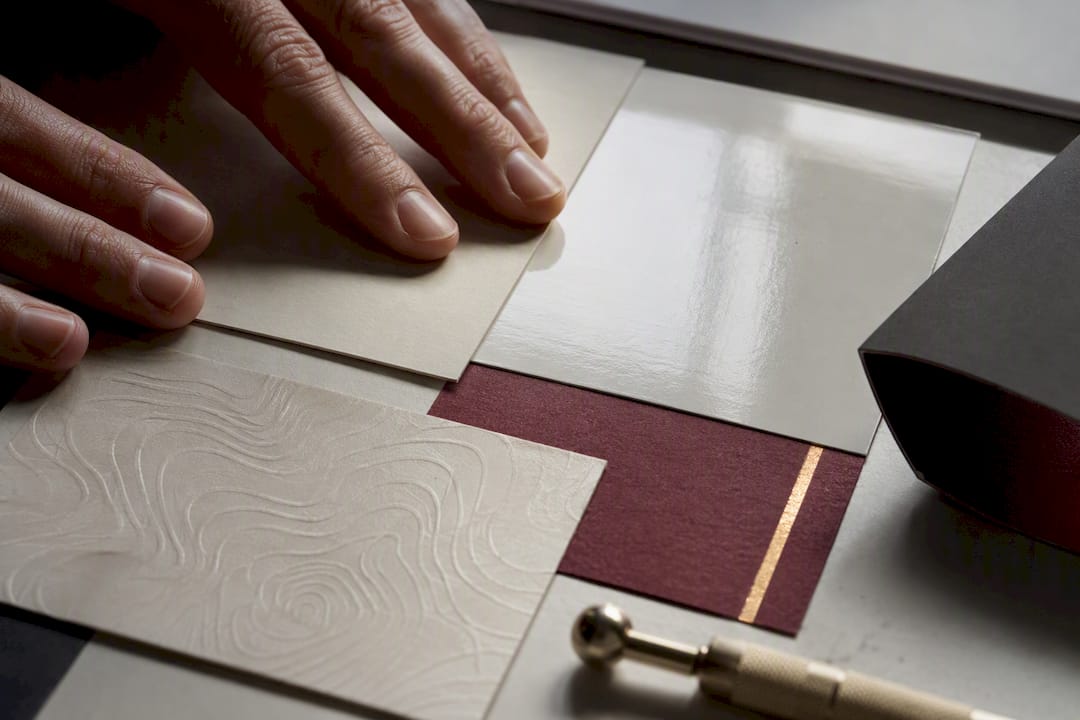
Sustainability factors into stock selection directly. EPA data on packaging waste makes clear why FSC-certified board, post-consumer recycled content, and soy-based inks have moved from marketing footnote to procurement requirement for many brands.
Key material and finish trade-offs to weigh before you spec a job:
- 12 to 16 pt coated stock for photography-forward retail sleeves
- Uncoated, grease-resistant stock for food-contact applications
- One hero finish (foil or emboss) rather than three competing effects
- Die-cut windows to reduce print cost while increasing shelf pull
Print-Ready Files and Production Checklist (CMYK, Bleed, Proofs, and Timelines)
Press errors on sleeve jobs are almost always preventable at the file-prep stage. Design in CMYK from the first draft rather than converting from RGB later, since color shifts at conversion are one of the most common causes of a rejected proof.
Work through this checklist before you submit final files:
- Export a press-ready PDF/X file with all images at 300 DPI minimum.
- Set bleed to 3 mm (1/8 inch) and keep all text and logos inside the safety margin, away from fold and trim lines.
- Embed or outline every font so nothing reflows on the printer’s system.
- Provide the dieline as its own separate layer, with vector cut lines, fold lines, and glue tab positions clearly marked.
- Order a physical hard-copy proof before committing to a full run; screen color and printed color are never identical.
A hard-copy proof remains the cheapest quality assurance step available to you, catching color drift, finish mismatches, and dieline errors before they scale across thousands of units.
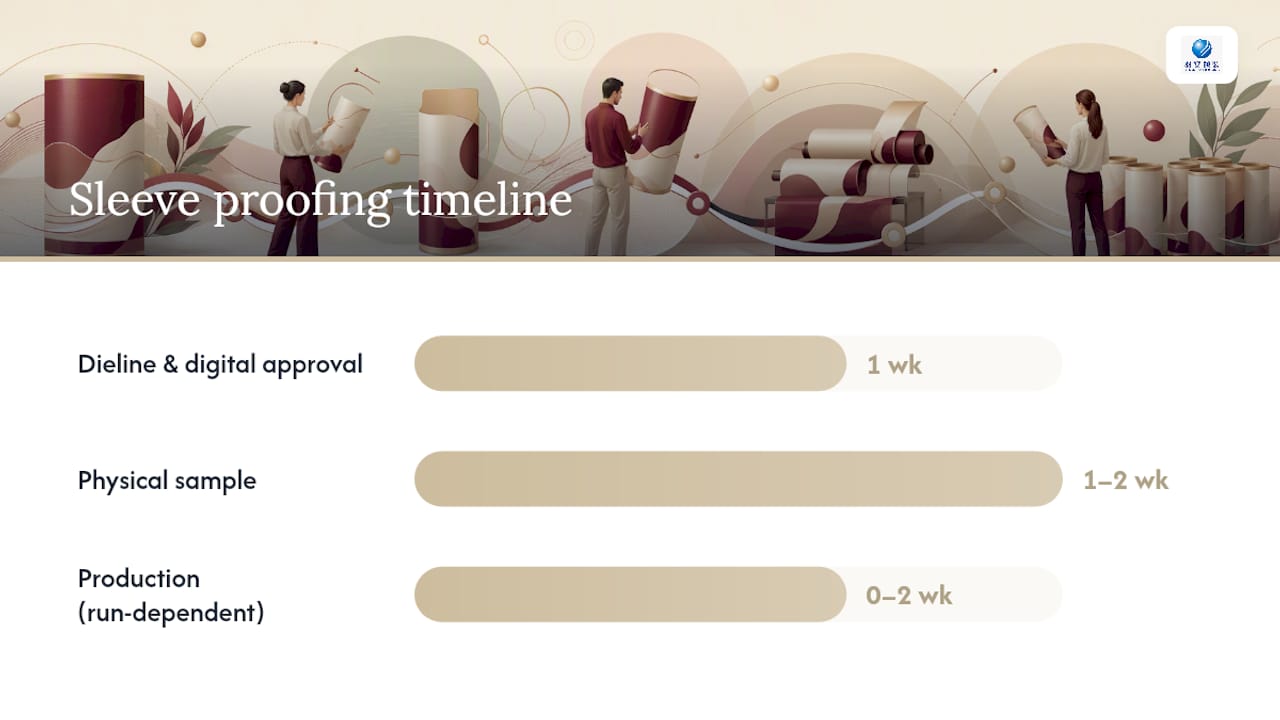
**Pro Tip:** _Build your proofing timeline backward from your ship date. A realistic sequence runs roughly one week for dieline and digital proof approval, one to two weeks for a physical sample, then production time based on run size, so budget at least three to four weeks total for a mid-size order with one finish revision round._
Unit costs on sleeves scale with four levers: order quantity, stock weight, number of finishes, and complexity of the die itself. A basic single-color sleeve on light stock costs far less per unit than a foil-stamped, windowed sleeve on heavier board, and quantity remains the single biggest lever on price per piece.
Yuan Packaging’s Sleeve Capability: Proof Points, Workflow, and What They Deliver
Yuanpackaging has built its sleeve production around brands that need premium finishes without premium-scale minimums. Here’s what that means in practice:
- Extensive experience producing custom packaging for beauty, spirits, and lifestyle brands
- Bespoke finishes including foil stamping, embossing, spot UV, and holographic effects available on printed sleeve runs
- Experience delivering units to a wide range of brands worldwide
- Sustainability commitments including FSC-certified and recyclable material options
The project workflow moves through dieline review, a sampling and prototype stage, finish mockups for approval, then production at whatever scale fits your launch, from a small pilot run to a high-volume reorder, with quality control checkpoints throughout.
Before reaching out, have four things ready: your dieline or base container specs, your desired finish list, your target run size, and the delivery markets you need to ship into. Having those answers upfront cuts weeks off the quoting process.
Design Perspective: Using Tactile Storytelling and Restraint to Make Sleeves Memorable
Most sleeves fail the same way: too many finishes competing for attention instead of one doing the real work. A single foil hit on a logo, held against a quiet uncoated field, reads more expensive than five effects fighting each other. Restraint is the underrated design skill here.
The real opportunity is what happens after the sleeve comes off. Case studies of ceremonial gift packaging show that hiding a small ritual card or a line of micro-copy under the sleeve, invisible until unboxing, turns a wrap into a moment worth keeping. Design projects built around narrative sleeves confirm this pays off directly in keepability, which matters more for gift sets than for everyday retail SKUs. Keep the exterior minimal. Let the interior do the storytelling.
_— Anthony_
Work With Yuan Packaging: Request a Sample or Quote
Yuanpackaging gives you a direct path from sketch to shelf-ready sleeve without the guesswork of vetting a new factory relationship from scratch. For a working quote, send over your dieline (or base container dimensions if you don’t have one yet), target quantity, preferred stock and finishes, and shipping destination.
Yuanpackaging will review your dieline, flag any structural issues before they become production problems, and produce a printed sample so you can approve color and finish in hand rather than on screen. If your project also needs a coordinated rigid box or matching finishes across a full gift set, that conversation happens in the same quote. Start by browsing the custom printed sleeve options or head to the Yuanpackaging homepage to submit your project details and get a quote moving.
Key Standards and Reference Links
For U.S. label claims, check the FTC’s Fair Packaging and Labeling Act rules before finalizing copy. For sustainability planning, the EPA’s packaging waste data offers a credible baseline. For dieline previews and 3D mockups, tools like Pacdora’s sleeve generator help you visualize a design before committing to print.
Sources
- Mật Mã Gift Set Packaging Design | DesignRush
- Fair Packaging and Labeling Act regulations | FTC
- Containers and packaging: product-specific facts | EPA
- KOTORI Uji Matcha ceremonial gift packaging | Behance
FAQ
What Is the Difference Between a Sleeve and a Full Carton?
A sleeve is a printed wrap around a simpler base structure, while a full carton is the entire structural container; sleeves cost less to tool and print but offer less physical protection than a rigid box.
What Paper Weight Works Best for a Sleeve?
Most sleeves use a stock weight that provides adequate rigidity; heavier or corrugated options are chosen when additional protection is needed during shipping.
How Do Sleeves Attach to the Base Container?
Sleeves typically close with a glue tab, a peel and seal adhesive strip, or a simple friction fit depending on the base shape; your manufacturer’s dieline will specify the exact tab position and closure method.
How Long Does It Take to Go From Design to Delivery?
A realistic timeline includes time for dieline and digital proof approval, physical sampling, and production, generally spanning several weeks depending on order size.
Can Yuanpackaging Produce Small Test Runs Before a Full Order?
Yes, Yuanpackaging’s workflow includes a sampling and prototype stage before committing to a full production run, so you can approve finishes and fit on a physical sample first.