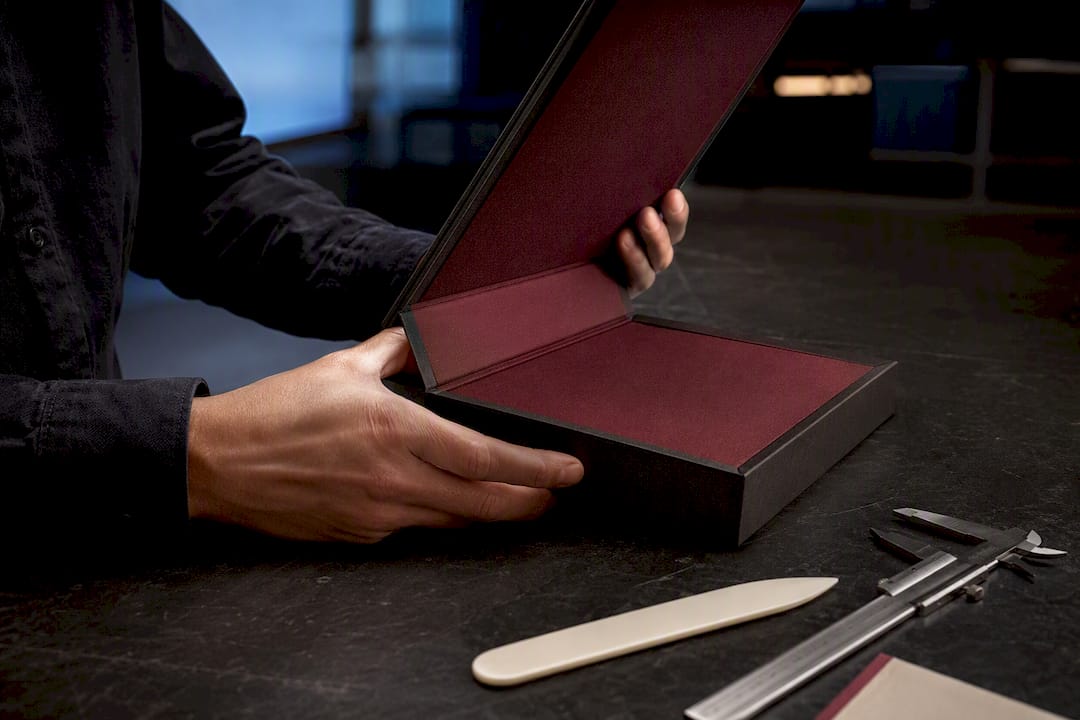
A book style box is a rigid, hinged box engineered to open like a hardcover book, with a spine, cover boards, and a lining that mimics binding. It’s the right choice for luxury gifts, collector or limited editions, and retail displays where the unboxing moment needs to feel considered rather than functional. If your product is heavy, oversized, or price-sensitive at scale, a standard rigid setup box or folding carton will usually serve you better.
**TL;DR:** Most book style boxes use 2mm to 3mm rigid board, with thicker options recommended for heavier products like spirits or hardware. Interior lining colors that contrast the exterior can significantly enhance perceived quality, especially when the lid swings open. Magnetic closures with embedded magnets are preferred for durability during repeated handling, while ribbons suit one-time gifts but wear out faster. Proper dieline specifications, including hinge width and clearance for board thickness, are crucial to prevent misaligned closures on the first prototype. Recycled materials are available, but virgin boards provide finer embossing and foil details when design precision is a priority.
Table of Contents
- What Is a Book Style Box and How Does It Vary?
- Which Boards, Papers, and Linings Should You Specify?
- Which Closure Should You Choose for Your Book Style Box?
- How Do Finishes Like Foil and Embossing Affect Design?
- How Should You Design Inserts for a Book Style Box?
- How Do You Prepare Dielines and Prototypes Correctly?
- What Do Lead Times, Minimums, and Costs Look Like?
- What Sustainable Material Options Exist for Book Style Boxes?
- Why This Guide Comes From a Manufacturer’s Production Floor
- The Real Gap in Most Book Style Box Advice
- Ready to Move From Spec Sheet to Sample?
- Sources
- FAQ
What Is a Book Style Box and How Does It Vary?
Every book style box shares the same basic promise: a hinged spine that lets the lid swing open like a cover, rather than lifting straight off. Beyond that, the format splits into a few structural families, and picking the wrong one is one of the most common early briefing mistakes.
**Hinged clamshell boxes** open on a fixed spine hinge and stay attached, which is what most people picture when they hear “book box.” **Setup boxes with a separate lid** skip the hinge and rely on a friction-fit or magnetic top, giving a cleaner look at the cost of that book-like swing motion. **Slipcase combinations** pair a book-style shell with an outer sleeve that slides off first, adding a reveal step that collectors and premium spirits brands use to slow the unboxing down on purpose.
The anatomy is consistent across variants:
- *Rigid board** — the structural core usually made of chipboard or grayboard
- *Cover paper or cloth** — the wrapped exterior material that carries print and finish
- *Spine** — the hinge point, either taped, sewn, or wrapped depending on flex needs
- *Hinge** — the mechanism allowing the lid to swing rather than lift
- *Interior lining** — the material glued inside, often contrasting the cover for a reveal effect
Fragrance and cosmetics brands lean on hinged clamshells for their theatrical open. Watch and jewelry brands often prefer setup boxes for a tighter, more architectural feel. Spirits and limited-run collectibles frequently combine a book style box with a slipcase, similar in spirit to what you’ll find on Pacdora’s supplier galleries showing the format across categories.
Which Boards, Papers, and Linings Should You Specify?
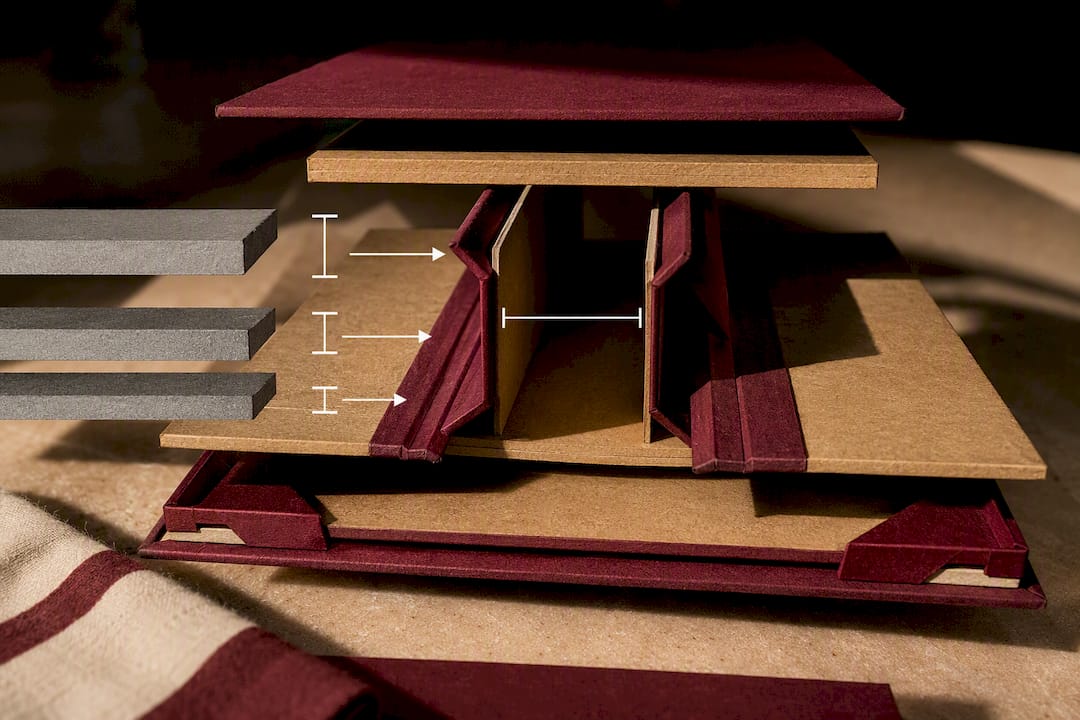
Board thickness drives both the tactile weight and the structural integrity of a book style box, and it’s the single most under-specified detail in early briefs. Most premium book style boxes use **2mm to 3mm grayboard**, with 2mm suiting lightweight cosmetics and 3mm better for anything with real heft, like a boxed spirits set or a hardware accessory. Go thinner and the spine feels flimsy after a few open-close cycles. Go thicker and you add shipping weight without a proportional gain in perceived quality.
Cover material choices split into three broad categories:
- *Coated or uncoated art paper** — the most economical, works well with foil and litho printing
- *Textured or cotton-fiber papers** — add a tactile layer that reads as premium before the customer even opens the box
- *Cloth or laminate wraps** — used for high-end collector editions where durability under repeated handling matters
Craft tutorials and DIY sources often show book-shaped boxes made from folded paperboard rather than true rigid construction, and the difference shows up immediately in hand. A folded paperboard book box will flex and dent in shipping in a way that a properly wrapped rigid board simply won’t.
Interior lining matters more than most brand teams expect. A contrasting lining color, revealed the moment the lid swings open, is often the cheapest way to add a “premium” impression without touching the exterior print at all.
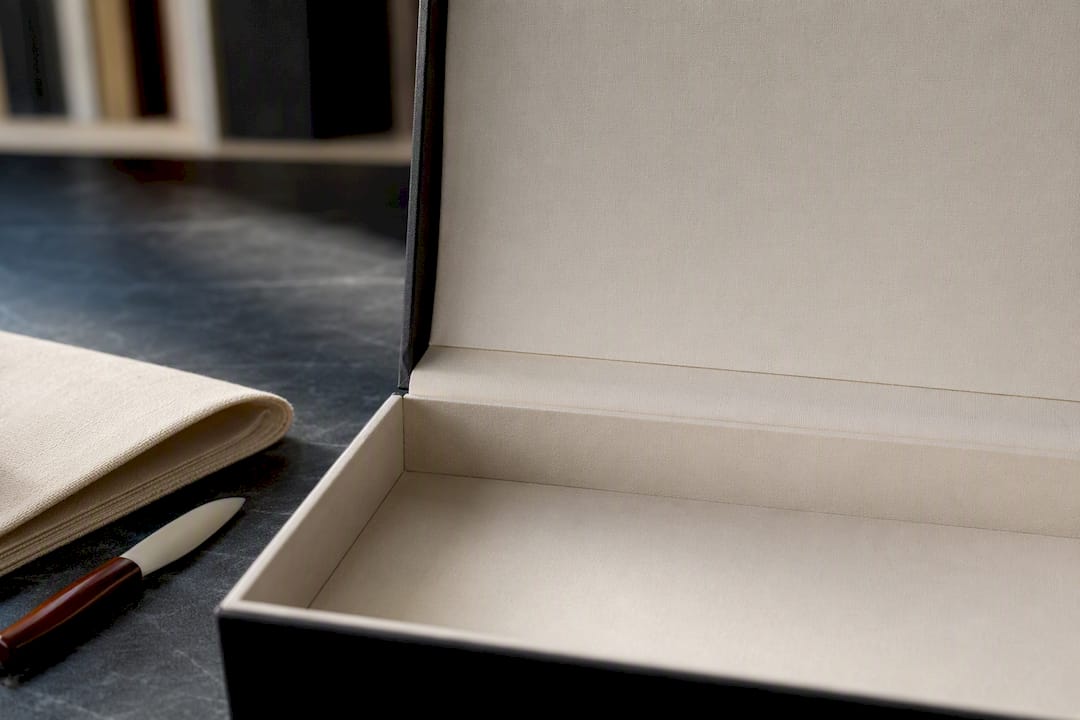
**Pro Tip:** _If your budget only stretches to upgrade one surface, upgrade the lining before the cover. The exterior sells the box on a shelf; the lining sells the experience the second the customer opens it._
Construction quality also determines how the box survives transit. A well-wrapped spine with reinforced corners tolerates repeated handling on a retail floor far better than a lightly taped equivalent, which is worth weighing against your rigid box production options before finalizing a spec.
Which Closure Should You Choose for Your Book Style Box?
Closure choice comes down to how the box will actually be handled, not just how it looks in a render. **Magnetic closures** are the default for most book style boxes today, and the strength you need depends entirely on lid weight and hinge tension. Suppliers commonly use thin-profile embedded magnets glued discreetly into the board, a detail visible across PakFactory’s inspiration boards as the standard approach for premium formats.
- *Embedded magnets** — invisible from the outside, ideal when the brand wants a seamless closure with no visible hardware
- *Ribbon pull closures** — decorative and brand-forward, but they wear out faster under repeated retail handling and work best for one-time gifting rather than shelf display
- *Mechanical clasps or screw posts** — reserved for heavier products or boxes that need to survive repeated opening in a retail environment, like sample kits or demo units
For light gift items opened once, a ribbon or single small magnet is plenty. For anything over a pound, or anything that will be opened and closed dozens of times on a display table, go with dual embedded magnets or a reinforced clasp. If your box will double as long-term storage, a magnetic closure system built for repeat use is worth the marginal cost over a decorative ribbon.
How Do Finishes Like Foil and Embossing Affect Design?
Lamination sets the baseline before any special effect touches the surface. **Matte lamination** softens color and resists fingerprints, which matters on dark or glossy cover stocks that show handling marks quickly. **Gloss lamination** sharpens contrast and saturates photography well but shows every fingerprint within days of shelf handling. **Soft-touch lamination** adds a velvet-like hand feel that’s become a near-default for fragrance and cosmetics packaging because it signals premium before a customer reads a single word.
Specialty finishes layer on top of that base:
- *Foil stamping** — works best on darker or matte cover stocks where metallic contrast pops
- *Embossing or debossing** — adds a tactile dimension but requires simpler line art; fine detail gets lost in the pressing
- *Spot UV** — creates a gloss highlight against a matte field, commonly paired with foil for logo treatments
Textured cover papers paired with foil stamping is one of the most repeated pairings across supplier and inspiration galleries, and for good reason. It’s a combination that photographs well and survives handling without the foil chipping the way it sometimes does on uncoated stocks.
Each added finish extends both cost and lead time, since foil and emboss dies require separate tooling passes beyond standard litho printing. If you’re weighing several effects, prioritize one dominant finish rather than stacking three, since combining foil, emboss, and spot UV on a single small panel often looks busier than premium.
How Should You Design Inserts for a Book Style Box?
Interior presentation earns its cost when the product is fragile, heavy, or genuinely worth showing off. Match the insert type to the product first, not the other way around.
- *Rigid trays** work for boxed sets with multiple fixed components, like a fragrance and lotion duo.
- *Die-cut foam or pulp cradles** suit fragile single items, cradling glass or ceramic pieces so they can’t shift in transit, a pairing seen often in Pacdora’s product galleries.
- *Molded pulp inserts** offer a lighter, more sustainable middle ground between foam and rigid board, though at a slightly softer finish quality.
Measure the product at its widest points first, then request a tolerance of roughly 1 to 2 millimeters of clearance per side. Too tight and the product jams on insertion; too loose and it rattles during shipping. For anything with glass, request a foam cradle depth that fully seats the item below the box rim, so the lid closes without pressure on the product itself.
How Do You Prepare Dielines and Prototypes Correctly?
Getting a book style box right on the first prototype comes down to how precisely you brief the dieline. Spine width has to account for board thickness plus wrap allowance, not just the product’s own measurements, and this is the single most common source of misaligned closures on a first sample.
- Provide exact product dimensions **plus** any packaging inside it, like an insert or tissue layer, not just the bare item
- Request clearance notes on the dieline itself, not as a separate email, so the factory floor sees it during cutting
- Confirm spine width accounts for hinge tape and board thickness, since a spine cut too narrow causes the lid to bind on opening
- Ask for a physical prototype before committing to production, and check fit, swing arc, and closure alignment by hand
A detailed rigid box dieline guide walks through the tolerance notes that prevent the most common rework requests. The single biggest avoidable error: submitting a dieline with the product’s outer dimensions but no clearance allowance, which almost always produces a first sample that’s too tight to close smoothly.
What Do Lead Times, Minimums, and Costs Look Like?
Budgeting for a book style box means planning around three moving pieces: sample time, minimum order quantity, and one-time tooling costs. Sample development typically runs longer than production sampling for a simple folding carton, since the hinge and lining each need their own fit check before mass production starts.
- *Sampling** generally extends further out when multiple finishes or a custom insert are involved, since each element needs its own approval round
- *MOQ and tiered pricing** mean unit cost drops meaningfully as order volume rises, since setup and tooling costs get spread across more units
- *Tooling or die costs** for embossing, foil stamping, or a custom-shaped insert are typically one-time charges that apply once per design, not per reorder
- *International shipping** adds its own lead time on top of production, and consolidating a book style box order with related packaging, like a printed shipper for retail distribution, can simplify logistics
Lead times, MOQ thresholds, and tooling charges are consistently the factors buyers underestimate most when budgeting custom rigid packaging, often outweighing the cover material cost itself in the final unit price.
What Sustainable Material Options Exist for Book Style Boxes?
**FSC and PEFC certifications** confirm the board and paper in your box came from responsibly managed forestry, and more retail buyers now require proof of one before approving a packaging supplier. Ask for the certificate number, not just a claim of certification, since chain-of-custody documentation is what actually holds up in an audit.
- *Recycled board** costs less and reduces environmental impact, though it can show a slightly grayer core edge and less crisp emboss detail than virgin board
- *Virgin board** holds finer detail for deep embossing and foil work, making it the better pick when finish precision is the priority
- *Mixed-material linings**, like foam glued to fabric, complicate recyclability even when the outer box itself is recyclable
- *Metallic foils** can also interfere with paper recycling streams depending on local processing capability
**Pro Tip:** _Ask suppliers directly for their FSC chain-of-custody documentation rather than a general sustainability statement. A certificate number you can verify is worth more than a paragraph of eco language on a spec sheet._
Why This Guide Comes From a Manufacturer’s Production Floor
This guide draws on Yuanpackaging’s more than 25 years producing rigid packaging for beauty, spirits, and lifestyle brands, with over 100 million units delivered to 5,000 brands worldwide. That production history covers the full range this article describes: sampling, small-run prototyping, and high-volume mass production of book style boxes and related rigid formats. Buyers preparing to brief a supplier can review Yuan Packaging’s rigid box capabilities or request samples and technical datasheets directly before committing to a production run.
The Real Gap in Most Book Style Box Advice
Most guides to book style boxes stop at aesthetics: cover paper, foil, embossing, the visual language of premium. That’s the easy half. The harder half, the one that actually determines whether your box survives a retail supply chain intact, is spec discipline: clearance tolerances, spine width math, hinge durability under repeated handling. Brand teams lose more time to a spine cut too tight for the board thickness than to any finishing decision.
The conventional advice also underrates lining. Everyone obsesses over the exterior cover, but the lining is what the customer actually looks at during the moment that matters most, the open. It’s the cheapest upgrade with the highest perceived-value return, and it’s routinely skipped in favor of a fourth exterior finish nobody needed.
If you’re briefing a supplier for the first time, prioritize the dieline conversation before the finish conversation. A gorgeous foil treatment on a box with a binding spine is a worse outcome than a plain cover on a box that opens like it should every single time.
Ready to Move From Spec Sheet to Sample?
Specification work similar to this guide can be turned into a working prototype rather than leaving you to translate dielines and tolerances on your own. A design and sampling team can review your dieline before production, catching clearance and hinge issues before they become a reworked sample.
Beyond book style boxes, the team supports the full range of finishes covered above, foil stamping, embossing, spot UV, and soft-touch lamination, plus sustainable board and FSC-certified material options for brands that need documentation, not just claims, examples of which you can find in custom shoe manufacturing production. Whether you’re sourcing your first collector edition run or scaling an existing luxury line, the rigid gift box product line covers formats from book style hinges to shoulder-neck boxes in one place. Explore the full packaging product range and request a quote or sample to get a real prototype into your hands before you commit to a production order.
Sources
- Box That Looks Like a Book — Pinterest ideas
- Pacdora — packaging examples and supplier galleries
- PakFactory inspiration boards — Pinterest
FAQ
What Is a Book Style Box Used For?
A book style box is used for luxury gifting, collector or limited editions, and premium retail display, wherever the brand wants the physical act of opening the package to feel deliberate rather than purely functional.
How Thick Should the Board Be for a Book Style Box?
Most book style boxes use rigid board between 2mm and 3mm, with 2mm suited to lighter cosmetics packaging and 3mm better for heavier items like boxed spirits sets.
Are Magnetic Closures Better Than Ribbon Closures?
Magnetic closures, especially embedded thin-profile magnets, hold up better under repeated retail handling, while ribbon closures suit one-time gift openings but wear out faster with frequent use.
Can a Book Style Box Be Made From Recycled Materials?
Yes, recycled board is a common choice for book style boxes, though virgin board typically holds finer emboss and foil detail if design precision is the top priority.
What Causes the Most Rework on a Book Style Box Prototype?
Spine width cut without enough allowance for board thickness and hinge tape is the most common cause of misaligned closures on a first prototype, which is why a detailed dieline review before sampling matters.