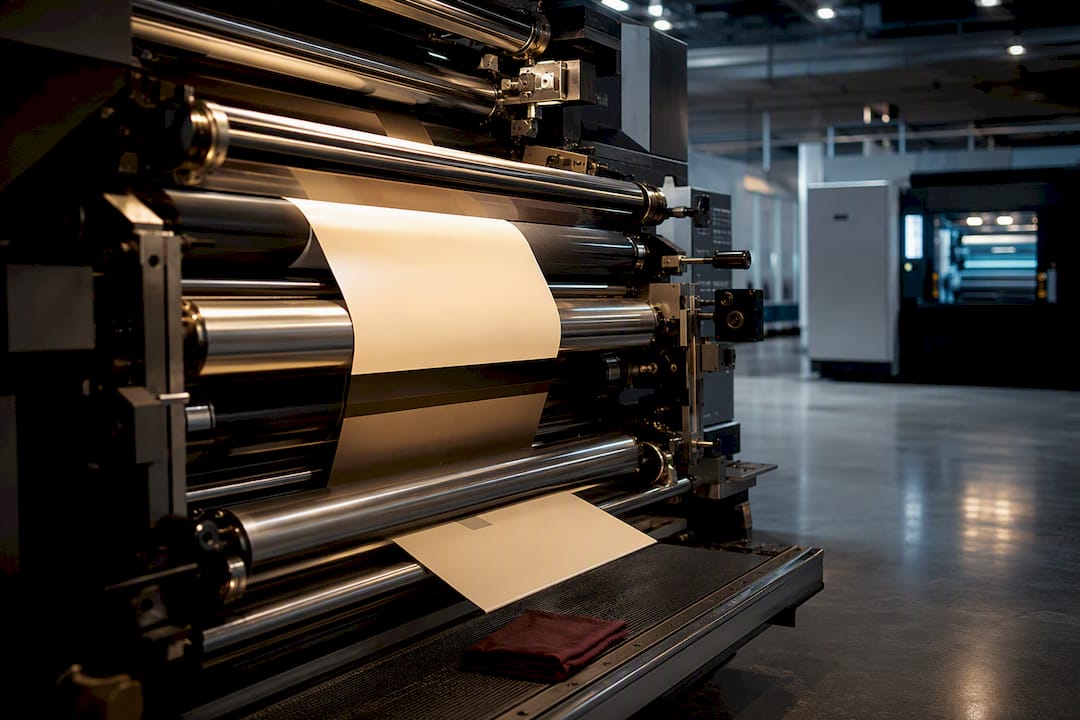
Choose digital printing for short runs, tight deadlines, and any project needing variable data or personalization. Choose offset when you need thousands of identical pieces with exact Pantone color matching and the lowest per-unit cost. The line between them usually falls in the mid-range of print runs, but coverage, colors, and finishing all shift that number.
**TL;DR:** Digital printing is more cost-effective for runs under 500 units due to zero setup fees, while offset becomes cheaper above 1,000 units because of its lower per-piece cost. Offset offers superior color consistency for spot colors like Pantone and cleaner results in fine details, but high-end digital presses are narrowing this quality gap. Digital excels in fast turnaround, variable data, and hybrid workflows, making it ideal for personalized and short-term projects. Offset is better suited for textured stocks, heavy boards, and premium packaging when visual weight and surface quality are critical. Requesting physical samples and side-by-side proofs helps distinguish which method better fits your design, substrate, and color accuracy needs before committing.
Yuanpackaging
Explore Yuan Packaging
Table of Contents
- Offset vs Digital Printing: How Each Process Actually Works
- Cost, Run Length, and Turnaround: Where the Break-Even Actually Falls
- Quality and Color Fidelity: Pantone vs CMYK
- Substrates and Finishing: What Each Method Can Actually Print On
- Variable Data and Hybrid Production Workflows
- Which Method Fits Your Project? A Quick Decision Checklist
- Where Printing Technology Is Headed
- Why This Matters for Packaging Buyers
- An Editorial Take on Getting This Decision Right
- Get Labels and Packaging Built for Your Actual Run Size
- Sources
- FAQ
Offset vs Digital Printing: How Each Process Actually Works
The mechanics explain almost everything about cost, speed, and quality. Offset printing transfers an image from a metal plate to a rubber blanket, which then rolls the ink onto your substrate. Sheetfed presses handle boxes and labels; web offset presses feed from giant paper rolls and dominate catalogs, magazines, and massive direct-mail runs thanks to their speed once running.
Digital printing skips plates entirely. Files go straight to press through inkjet nozzles or toner-based electrophotography, the same core technology behind office laser printers scaled up for production. Because there’s no plate to etch or mount, setup takes minutes instead of hours.
That gap in setup is why offset jobs need make-ready sheets to calibrate ink and registration before the “good” copies start rolling, generating waste before a single sellable piece exists. Digital jumps straight to production.
Cost, Run Length, and Turnaround: Where the Break-Even Actually Falls
Offset carries heavy fixed costs upfront: plates, press setup, and calibration. Digital carries almost none, charging a flat rate per piece regardless of quantity. That structure flips the economics depending on volume, and it’s why digital wins on short runs while offset wins once you’re printing in bulk.
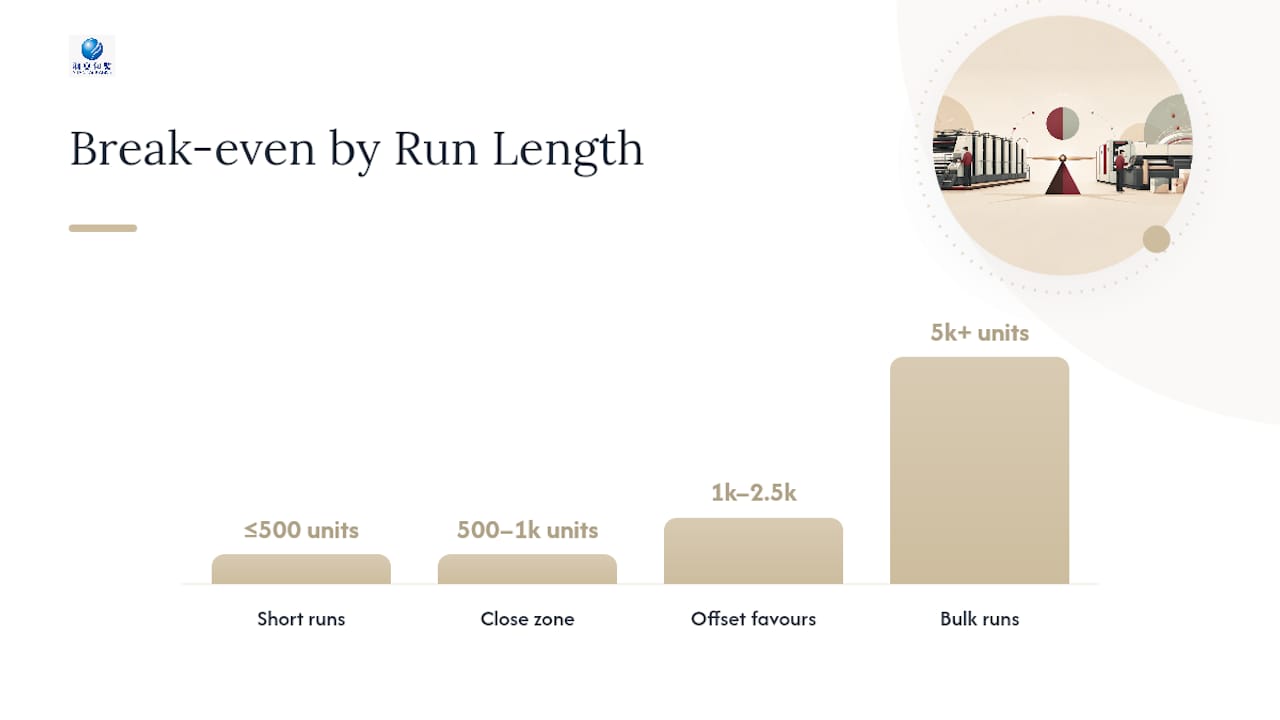
Rule-of-thumb break-even points, though every job varies:
- *Under 500 units**: digital almost always costs less once you factor in offset’s plate and setup fees.
- *500 to 1,000 units**: the zone where it’s genuinely close. Get quotes for both.
- *Above 1,000 to 2,500 units**: offset’s per-piece cost usually drops below digital’s flat rate.
- *5,000+ units**: offset’s amortized setup cost makes it the clear winner in most cases.
Coverage matters too. A label with five spot colors and heavy ink coverage pushes the offset break-even point higher than a simple one-color design. Turnaround favors digital for anything urgent, since there’s no plate lead time. For a deeper look at how setup costs behave across bulk orders, this primer on bulk printing cost factors breaks down the mechanics well. Digital’s flat cost also removes the reorder penalty. Need 200 more units next month? Print on demand instead of warehousing a pallet of extras you may never use.
Quality and Color Fidelity: Pantone vs CMYK
Offset still holds the edge for repeatable spot color. When a brand’s packaging depends on an exact **Pantone** ink hitting the same shade on run after run, offset’s dedicated ink formulation delivers that consistency more reliably than digital’s CMYK process builds every color from four base inks. Fine detail, tight typography, and large flat color fields also tend to render more cleanly through offset’s plate-to-blanket transfer.
That said, the gap has narrowed considerably. Extended-gamut digital presses and high-resolution UV inkjet systems now produce color that satisfies most brand standards, especially for photographic imagery and gradients where offset offers no particular advantage.
**Pro Tip:** _Always request a physical proof, not a screen preview, before approving a production run. Ink behaves differently on coated stock versus uncoated stock, and monitors lie about color in ways paper never will._
If your project has a hard Pantone requirement, say so at the quoting stage. If not, ask your supplier to show you a digital sample side by side with offset on the same stock.
Substrates and Finishing: What Each Method Can Actually Print On
Offset handles textured stocks, heavy boards, and certain metallic substrates with a level of consistency digital has historically struggled to match. That’s part of why offset remains common for rigid packaging and premium cartons where the paper stock itself carries visual weight.
Digital has closed much of that distance. UV inkjet systems and specialty primers now let digital presses print on synthetics, foils, and uneven surfaces that would have jammed a digital press a decade ago, expanding substrate compatibility considerably.
Finishing is where things get unpredictable. Varnish, lamination, embossing, and foil stamping all interact differently depending on the base print method and the stock underneath. A finish that looks flawless on one substrate can crack, rub, or peel on another, which is why testing a full finished sample matters more than testing the print alone.
Variable Data and Hybrid Production Workflows
Personalization is digital’s clearest advantage. **Variable data printing (VDP)** lets every piece in a run carry a different name, code, or SKU without slowing the press, a capability offset simply can’t replicate without a full plate change per version.
Common VDP use cases include:
- Direct mail with personalized names and offers
- Sequential barcodes or QR codes for tracking and anti-counterfeit measures
- Limited-edition packaging variants within a single production run
Hybrid workflows split the difference: offset handles the static base design at scale, and digital adds personalization or finishing afterward. If your project has both a large static run and a personalized component, ask your supplier for an integrated production plan rather than treating them as two separate jobs.
Which Method Fits Your Project? A Quick Decision Checklist
Some projects make the choice obvious. Others sit right in the gray zone where the decision comes down to priorities.
- *Business cards, short-run postcards, and personalized mailers** favor digital for speed and per-piece flexibility.
- *Catalogs, magazines, and large direct-mail campaigns** favor offset once volume climbs into the thousands.
- *Labels with exact Pantone requirements** favor offset unless the run is small enough that digital’s cost savings outweigh the color trade-off.
- *Limited-edition packaging with SKU-level variation** favors digital or a hybrid approach.
Before committing, run through this: What’s your quantity? What’s your deadline? Does the design require exact spot-color matching? Do you need personalization? What’s the budget ceiling?
**Pro Tip:** _Ask your supplier for two comparable quotes, one offset and one digital, on the same specs. The numbers usually make the decision for you faster than any rule of thumb._
Where Printing Technology Is Headed
Hybrid presses that combine offset units with inline digital stations are expanding what’s practically possible in a single pass, letting brands get offset’s color consistency and digital’s personalization without running two separate jobs. Print-on-demand continues to cut waste and warehousing risk industry-wide, since nothing gets produced until it’s actually ordered.
On the environmental side, water-based inks and UV/LED curing are reducing chemical use and energy draw on both offset and digital equipment. If you’re evaluating suppliers over the next few years, ask specifically about extended-gamut digital capability and primer systems for unusual substrates. That’s where the fastest improvement is happening.
Why This Matters for Packaging Buyers
A leading packaging manufacturer has spent more than 25 years producing bespoke labels, rigid gift boxes, and carrier bags for beauty, spirits, and lifestyle brands, combining traditional offset craftsmanship with modern digital capability depending on what each project actually needs.
Before locking in a production method, request color-matched proofs, physical substrate samples, and a finishing trial on the exact stock you plan to use. Testing the full assembly, not just a print swatch, catches problems before they hit a warehouse full of finished units.
An Editorial Take on Getting This Decision Right
The mistake most buyers make isn’t picking the wrong method. It’s picking a method before they know their real quantity, deadline, and color requirements. Run the numbers first, request both quotes, and let the specs decide. Samples and side-by-side proofs settle more arguments than any spec sheet ever will.
_— Anthony_
Get Labels and Packaging Built for Your Actual Run Size
Some packaging suppliers work across both production methods, matching offset’s color consistency to large stable runs and digital’s flexibility to shorter, personalized, or fast-turnaround projects, so you’re not forced into one technology for every job.
For beauty and cosmetics brands especially, color accuracy on labels can make or break shelf presence, and Yuanpackaging’s cosmetic and beauty label printing covers everything from Pantone-matched spot colors to fine-detail finishing across coated and specialty stocks. Spirits brands with tight bottle-label tolerances can review the custom wine and spirits label options built around the same substrate testing discussed above. If you’re still weighing quantities or deadlines, it’s recommended to request quotes and physical sample sets before committing to a full run. Seeing the stock and ink in hand settles more decisions than any spec sheet.
Sources
- Offset vs. digital printing: an overview of the fundamentals and future prospects
- Digital printing — Wikipedia
- Digital Printing vs. Offset Printing Differences — Taylor
FAQ
Is Offset Printing Better Quality Than Digital?
Offset generally delivers more consistent Pantone/spot color and finer detail, but modern extended-gamut digital presses have narrowed that gap significantly for most everyday projects.
How Can You Tell if a Print Is Offset or Digital?
Digital prints made with toner sometimes show a faint sheen or slight texture under magnification, while offset ink sits flatter on the substrate. The most reliable way is asking your supplier directly, since visual differences have shrunk with newer digital technology.
What Are the Disadvantages of Offset Printing?
Offset requires expensive plates and longer setup time, making it impractical for short runs, rush jobs, or projects needing personalization like variable data printing.
Which Is Cheaper, Digital or Offset Printing?
Digital is typically cheaper for short runs because it has no plate or setup cost, while offset becomes cheaper per unit once quantities climb high enough to amortize those fixed costs, generally in the thousands.
When Should I Choose Digital Over Offset for Packaging?
Choose digital when you need personalization, fast turnaround, or a run small enough that offset’s setup fees would outweigh the savings, and consult a supplier like Yuanpackaging for sample runs on your exact substrate before committing.